
Awareness content ages faster than we would like, and it ages for a fairly specific reason. We teach people to watch for signals, and signals belong to an era.
The unknown sender. The domain with one letter changed. The generic greeting, the sloppy spelling, the attachment that made no sense. All of that worked while the attack arrived by email and was written by someone in a hurry. Today the message comes in over WhatsApp, the director’s voice sounds exactly like the director, and the writing is flawless, because a language model wrote it. The clues expired, but the attack technique is still intact.
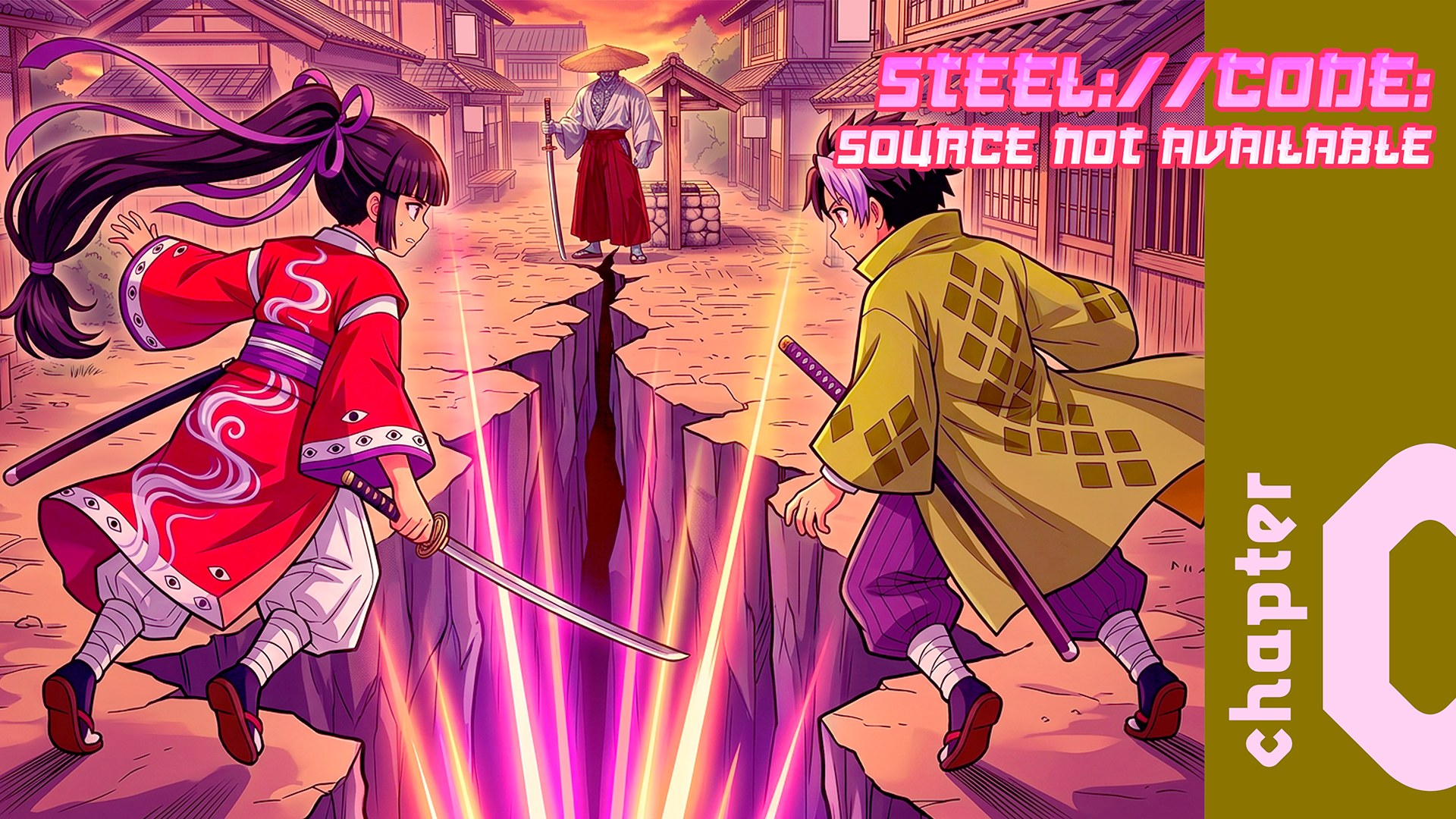
That is where STEEL://CODE came from, the cybersecurity manga we have just added to the catalog.
Unlike Western comics, manga is read from right to left, both within the page and moving from one page to the next, and that is the order we kept. So chapter 0 opens with a three-step guide for anyone who has never read one, showing which order to turn the pages in, which order to read the panels in, and which order to read the speech bubbles in. Nobody is left out by the format.
Why does a manga work for teaching security?
Dual coding theory, which Allan Paivio set out more than half a century ago, says something fairly simple. We process words and images through different routes, and when both tell the same thing, the memory ends up with two doors in. Comics live exactly there, and that is why they work in awareness better than their reputation as a lightweight format suggests.
Then there is the story, which does a different job and a harder one to pull off. While your head wants to know what the character is going to do, it is processing how the trick worked along the way. Attention holds by itself, and that is the part few mandatory modules solve, because a mandatory module is one more task.
Training that bores people is not retained, and what is not retained protects nobody. Choosing the format is a security decision, even if it sounds like a design decision, and we had already gone into it comparing comic, video and newsletter for different goals.
As the story moves along, the reader takes sides, gets ahead of the character and is a little annoyed when the character gets it wrong. That annoyance is active learning in disguise, and it is the reason storytelling changes behavior where the direct warning runs out of road. Nobody argues with a slide.
And there is the reach argument. Manga is one of the most widely read genres in the world, with a community that seeks it out for pleasure. A format people already choose in their own time gets through the corporate barrier without us having to push it.
Two eras to separate the trick from the technology
The whole story takes place in Kanazawa. The same city, twice, centuries apart.
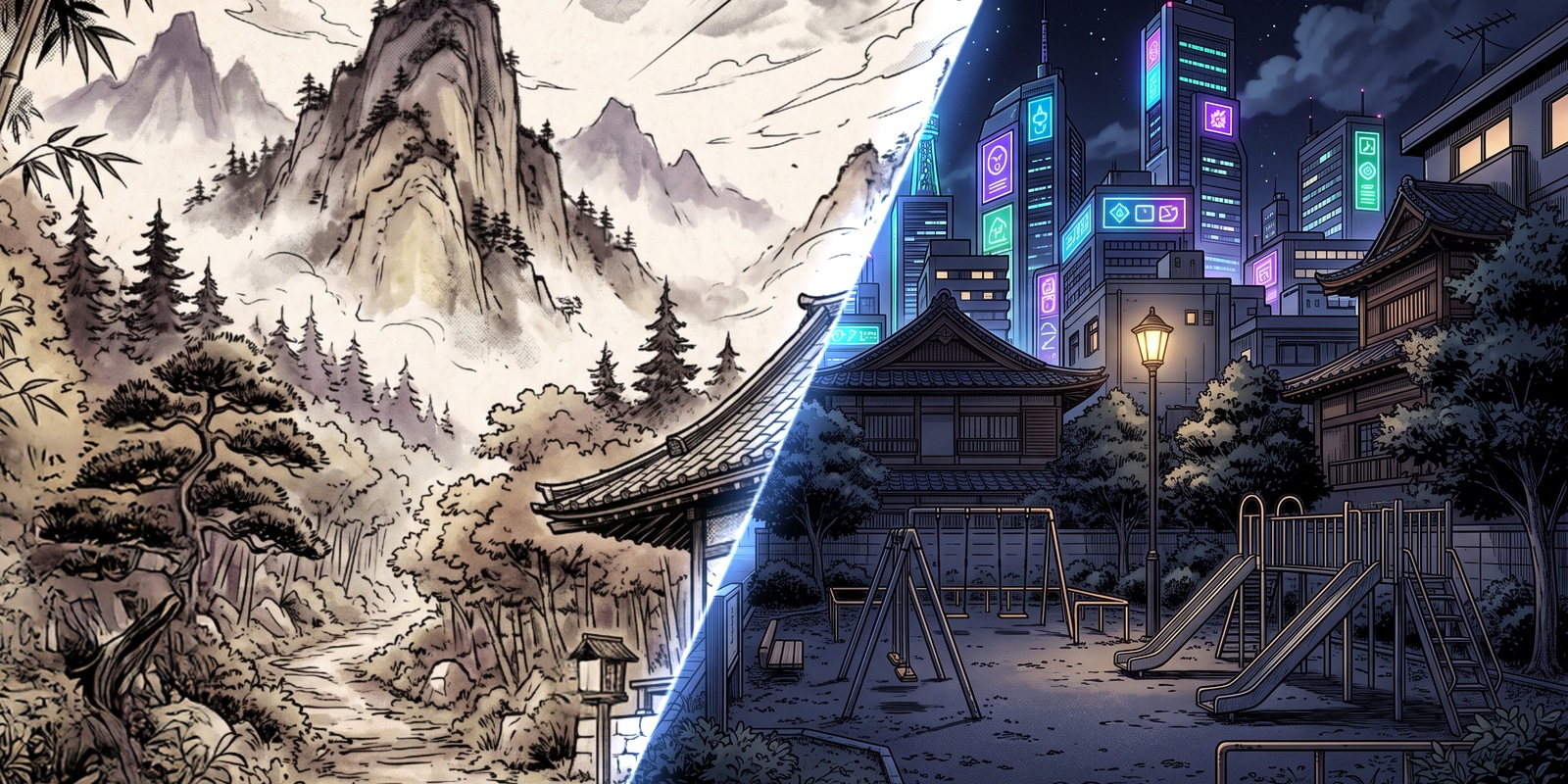
In the Steel Era we are in the Japan of the samurai, where honor, codes and katanas define life. Technology does not exist yet, but the threats do. The Oni-Maware are demons that steal people’s essence, and a brotherhood is devoted to facing them.
In the Code Era it is the same city, now hyperconnected, where skyscrapers live alongside temples. The Oni-Maware evolved into DemoHackers, with the same goals and new tools, and they answer to a criminal organization called Virus-Chan. The rift that connects the two eras is called The Rift in the Veil, and the brotherhood made its own journey too: it starts out as the Brotherhood of Demonic Protection and reaches the modern era as the Brotherhood of Cyber Protection.
What the reader gains is the comparison. When the trick shows up without a single cable involved, the urgency, the borrowed authority and the channel that cannot be verified are all left in plain sight. Recognizing it in an email afterwards is almost paperwork.
One security mistake per character
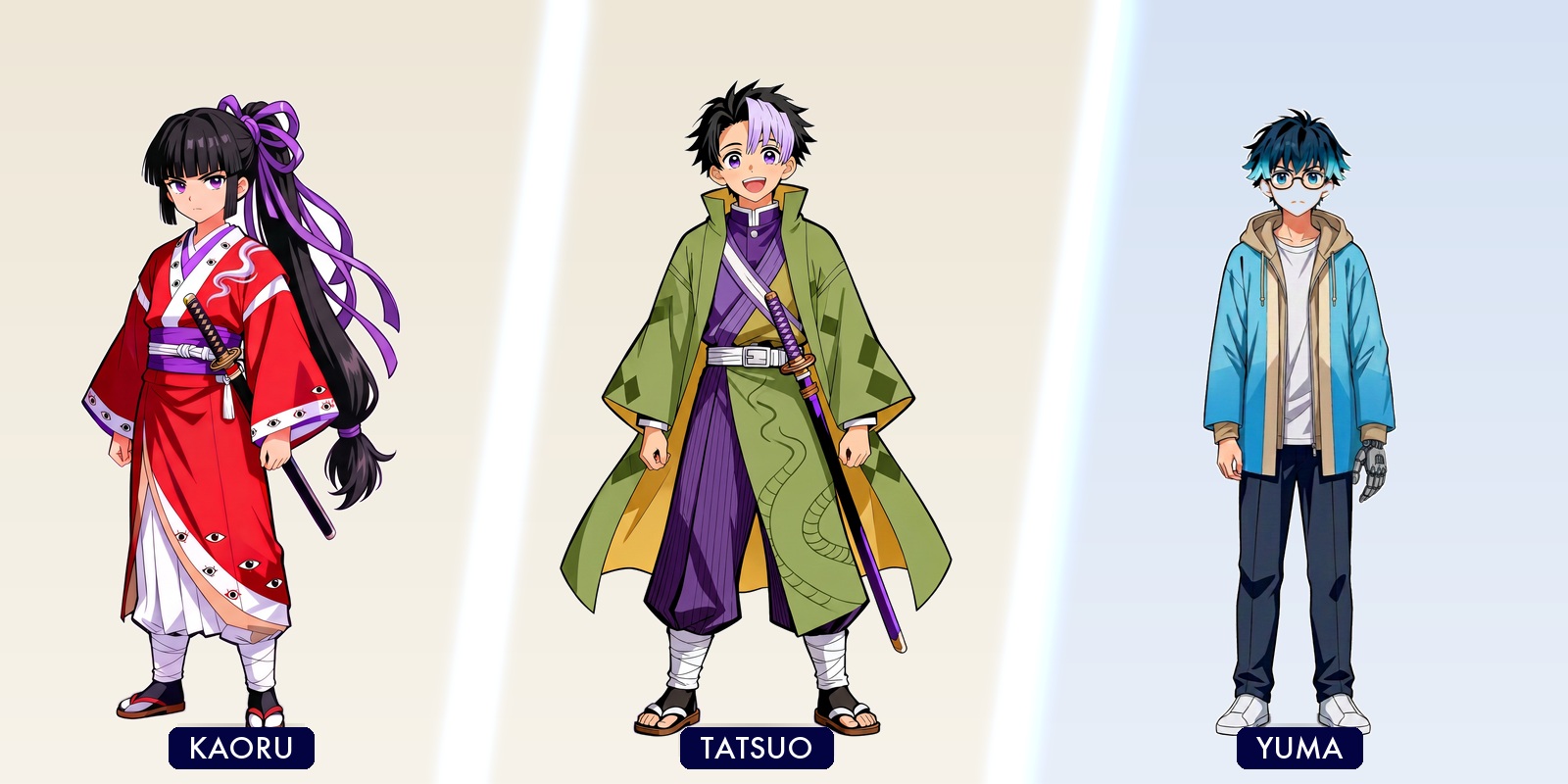
Adventure manga has a convention that suited us perfectly here. Each protagonist carries a single mistake, clearly identified and recognizable. Translated into our trade, each of those mistakes is a trainable behavior. And because they get it wrong the same way anyone gets it wrong day to day, your audience sees itself in the mistake before anyone hands it a rule.
Among the themes it covers, there is one that interests me: AI resolves things fast and with apparent confidence, and the temptation to hand over the whole decision shows up at the moments when it suits you least. It is the same ground we work on when we explain why, with deepfakes, training the eye is not enough.
What you can read today
Chapter 0 is already in the platform’s content catalog. It introduces the city, the three protagonists and the first crossing between the two eras, laying the ground for portraying the most relevant cybersecurity situations.
You can watch the trailer and meet the characters on the STEEL://CODE page, and the rest of the formats we work with are in the platform’s awareness tools. If you want to see it working with your own audience, request a demo and we will show you the inside.

Leave a Reply