Targeted plans cover the areas with a risk hypothesis. What coverage is left for the rest of the organization, and which indicator you can actually report.


Targeted plans cover the areas with a risk hypothesis. What coverage is left for the rest of the organization, and which indicator you can actually report.
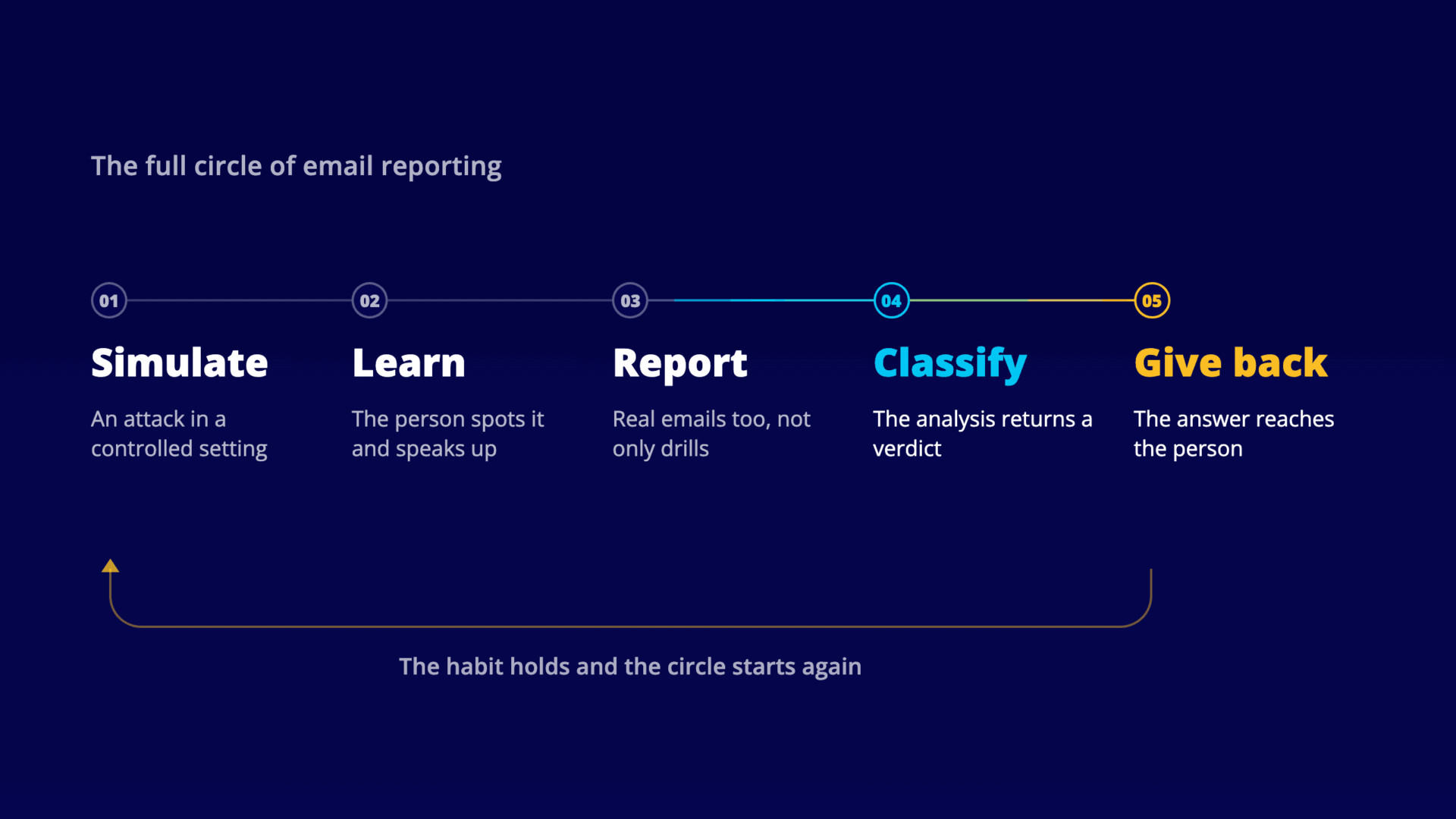
Which phishing reporting metrics program owners watch, how the report gets back to the person who sent it, and the two numbers that answer the board.
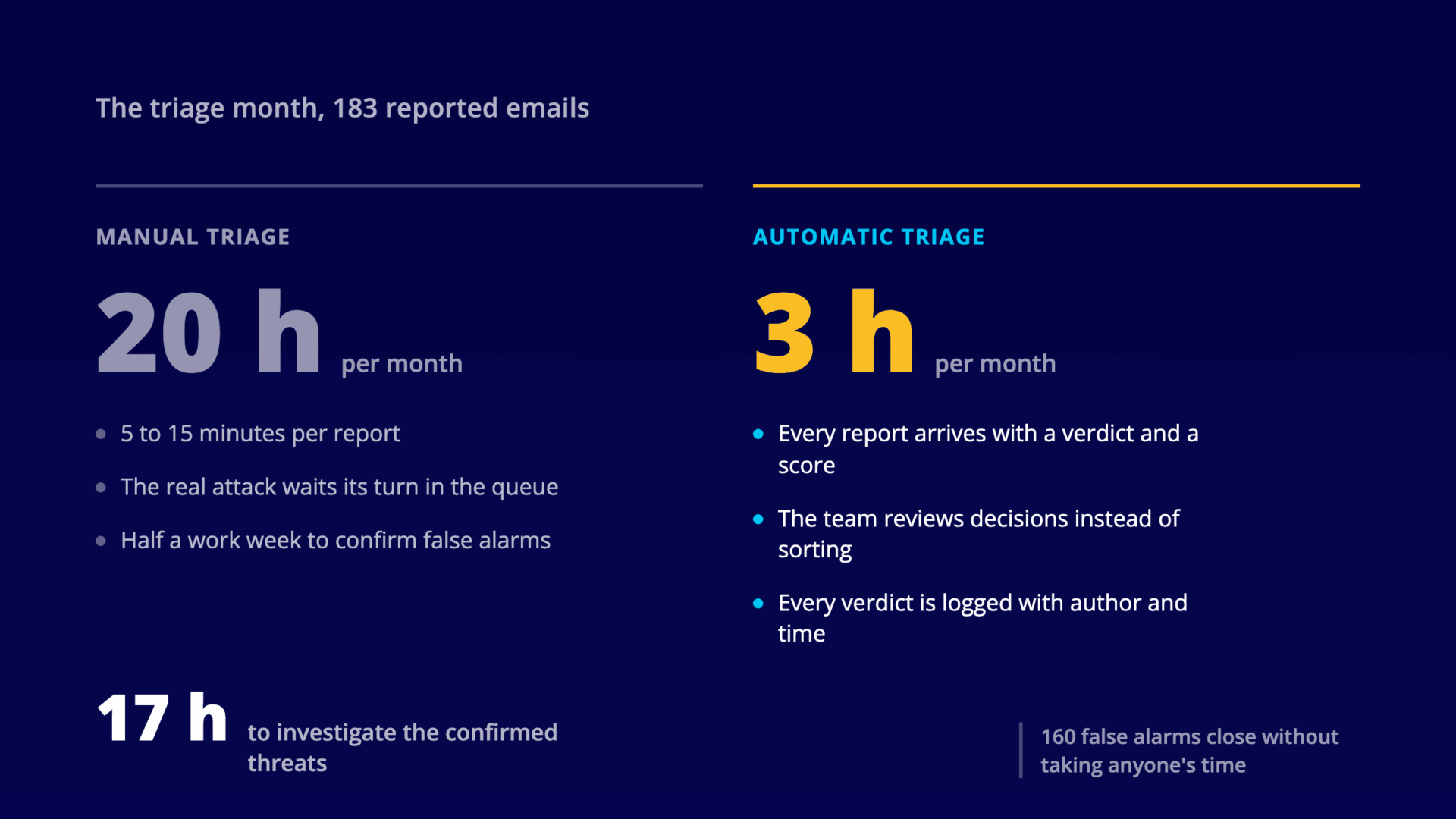
How long it takes to classify reported emails by hand, what work is left when triage is automatic, and who has the final say on the verdict.

The time between signing for an awareness program and sending the first campaign rarely depends on the platform. It depends on three internal decisions.
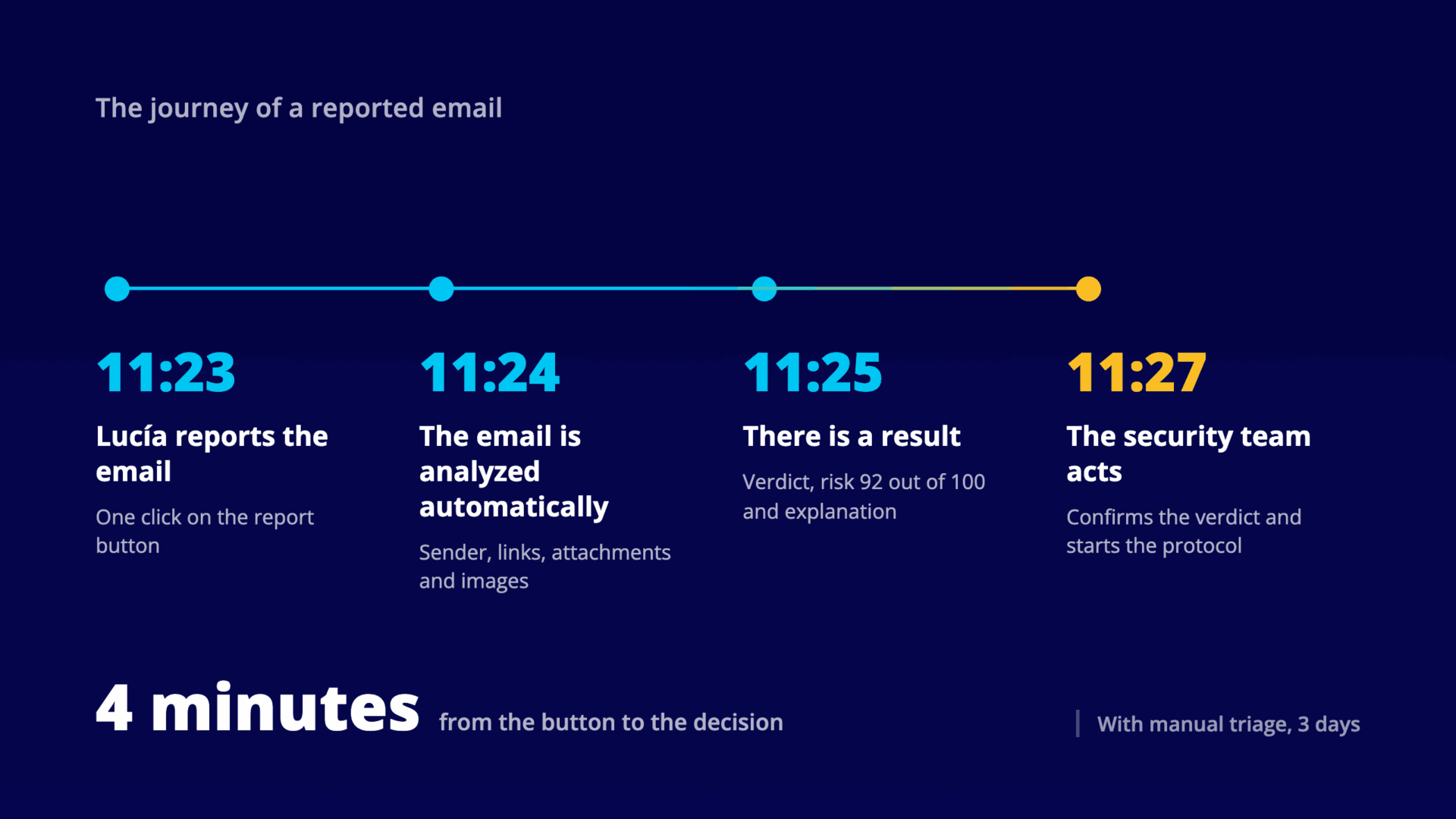
Automated triage of reported emails, step by step. What gets checked, what the security team receives and how long the complete journey takes.

Awareness program continuity gets tested by a vacancy. What keeps running on its own, what was left tied to one person’s name, and what to measure.

A phishing reporting habit that gets no answer fades on its own. How to design the consequence of a report so that the circuit finally closes.

Phishing report volume grows with your awareness program, and so does the triage queue. What it costs when a real attack waits its turn.