What changes between two simulations, what to keep fixed and how to use sample sending to track your phishing simulation click rate over time.


What changes between two simulations, what to keep fixed and how to use sample sending to track your phishing simulation click rate over time.

Falling for phishing takes under a minute. How an automated response to risky behavior works, and who each part of it talks to in the minutes that follow.

An email forwarding rule can be an innocent habit or the first step of invoice fraud. Why the alert gets closed as noise and who you need to talk to.

What CEO fraud is, why a general phishing simulation doesn’t measure it and how to run a targeted exercise on the people who can move money.
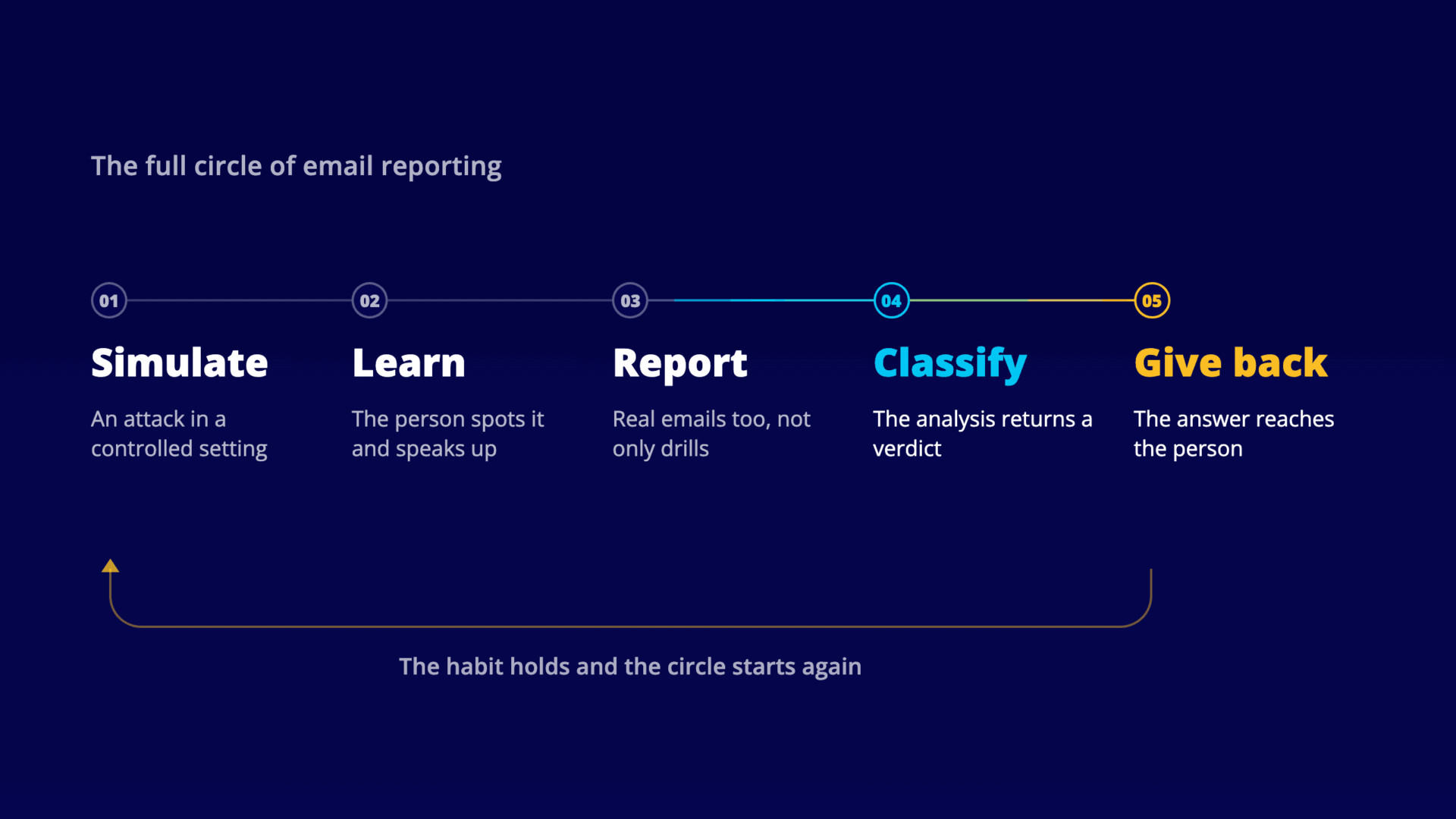
Which phishing reporting metrics program owners watch, how the report gets back to the person who sent it, and the two numbers that answer the board.
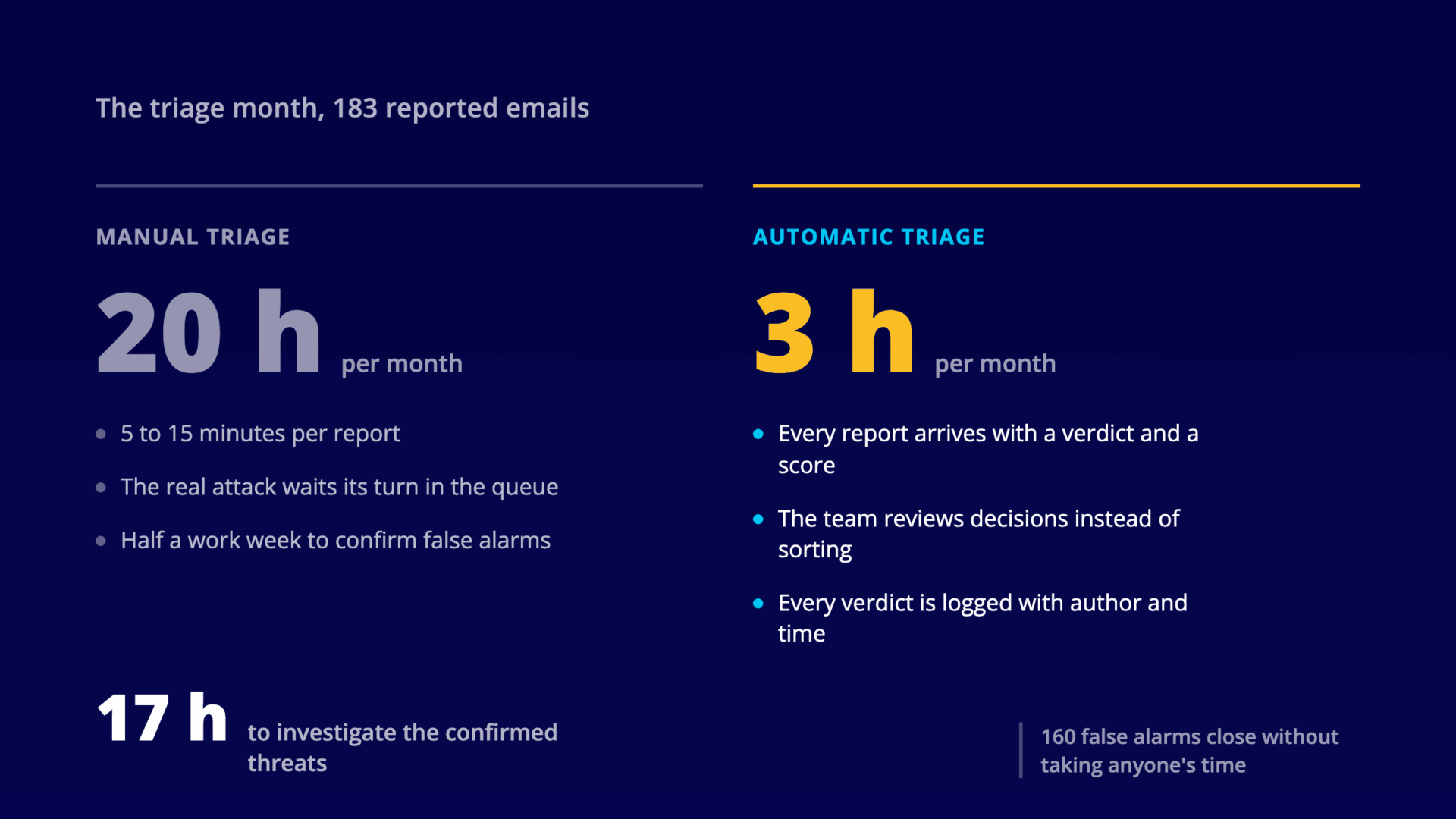
How long it takes to classify reported emails by hand, what work is left when triage is automatic, and who has the final say on the verdict.
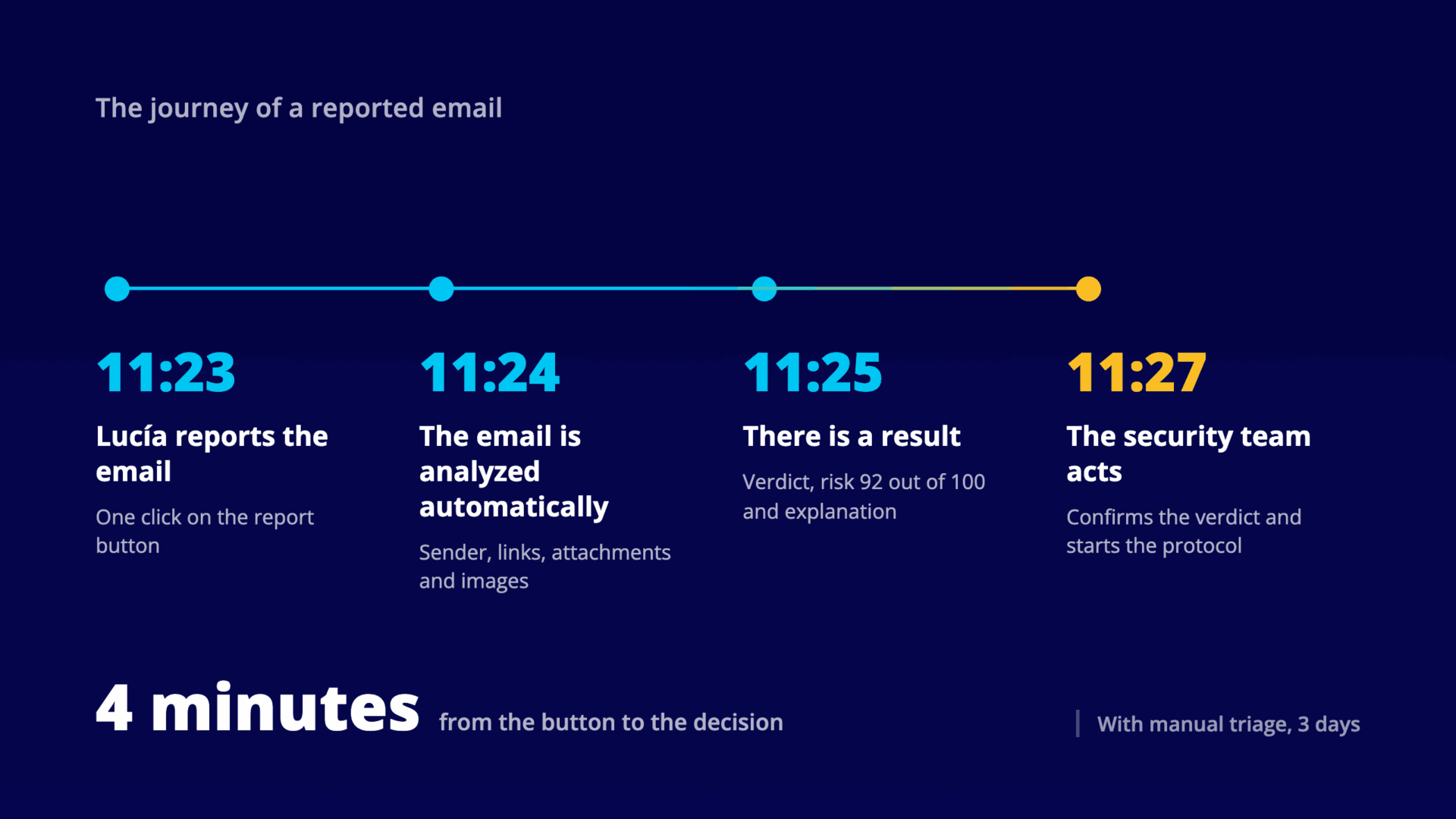
Automated triage of reported emails, step by step. What gets checked, what the security team receives and how long the complete journey takes.

A phishing reporting habit that gets no answer fades on its own. How to design the consequence of a report so that the circuit finally closes.