
In a digital ecosystem saturated with threats—where human error remains the most common attack vector—it is no longer enough to rely solely on firewalls, EDRs, or traditional monitoring. Modern security management requires an approach that integrates technology with human behavior. And this is where SIEM (Security Information and Event Management) and awareness converge in a critical, yet still underutilized, way.
What Is a SIEM?
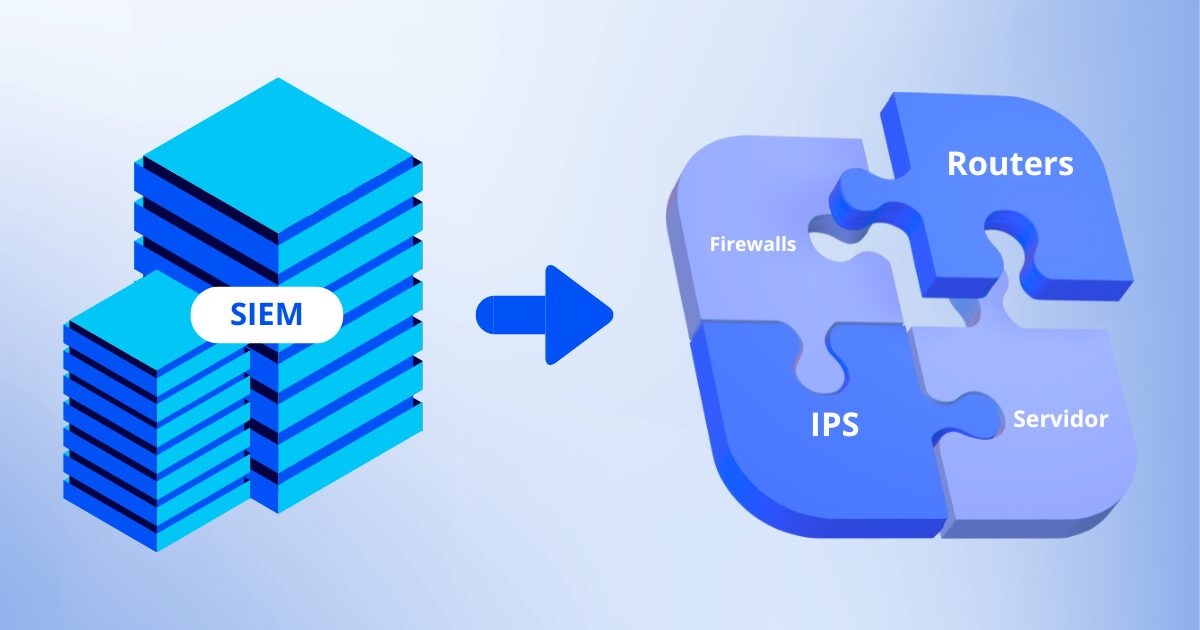
SIEM (Security Information and Event Management) systems are platforms designed to collect, correlate, analyze, and visualize security events generated by different systems and devices across an organization’s technology infrastructure: firewalls, servers, applications, endpoints, domain controllers, and more. Among other capabilities, SIEMs allow organizations to:
- Gain a centralized, real-time view of what is happening across the entire digital ecosystem.
- Detect incidents early by identifying anomalous behavior patterns, unauthorized access, and other indicators.
- Automate responses to certain events, reduce reaction times, and contain incidents more quickly.
The Missing Link: User Behavior
Imagine the following scenario: a user repeatedly fails phishing simulations, accesses suspicious content in awareness modules, or ignores warnings about weak passwords. Today, in most organizations, these events remain isolated within e-learning platforms or HR reports. They never reach the SIEM. They don’t trigger alerts. They don’t activate preventive controls.
This is a problem.

Interventions: Human Behavior That Feeds SIEM Intelligence
Having an awareness platform that can integrate with an organization’s security ecosystem allows us not only to detect cybersecurity-related events and actively coach people, but also to directly intervene in the most critical cases.
To enable this, we developed Interventions: automated actions that are executed when a triggering event occurs and allow our platform to communicate with external security tools.

For example, if a user clicks on a malicious URL, we can go beyond sending a notification or delivering additional training. We can also apply a conditional access policy in the directory service to temporarily disable that user’s access to critical applications.
Or, if someone sends a message containing sensitive information via Slack, it’s possible not only to alert the user but also to automatically delete the message through an intervention.
In this context, the range of possibilities is enormous.
Why Is This a Paradigm Shift?
Because it moves us from passive awareness—where we expect users to behave correctly after training—to active awareness, fully integrated into the organization’s cybersecurity ecosystem. Interventions transform learning signals into concrete risk indicators, powerful enough to dynamically adjust the security posture in real time.
Toward Adaptive, Behavior-Based Response
Attackers evolve—and our defenses must evolve with them. Integrating user behavior events into SIEM systems enables security responses that are more accurate, faster, and more personalized.
With Interventions, we close the loop: from awareness, to detection, to concrete action across the infrastructure.

Leave a Reply